


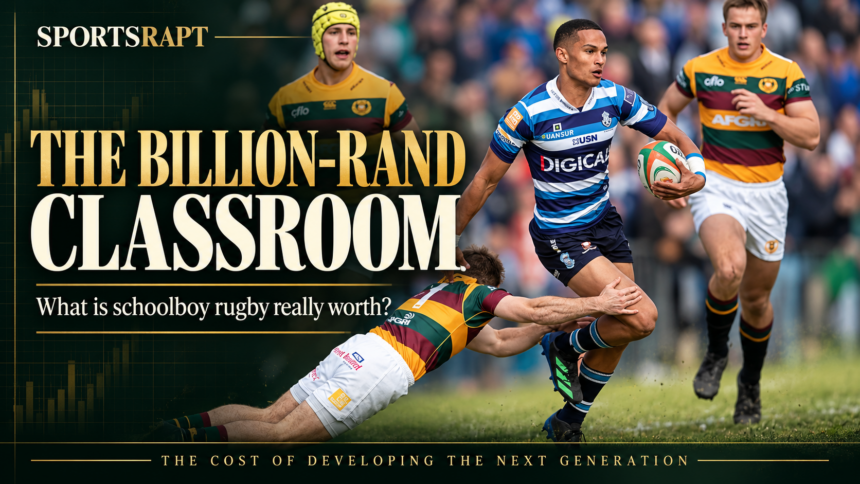
Every Springbok jersey starts on a school field. South Africa has won the last two Rugby World Cups, and the system behind that success is paid for by parents, old boys and the schools themselves.
The scale is bigger than most people realise. An industry estimate puts the annual rugby spend of the country’s top 200 rugby schools at well over R1 billion. Leading schools are reported to spend around R6 million a year each on their first-team programmes. Individual rugby bursaries reportedly range from R60,000 to R130,000, and top school coaches can earn more than R1 million a year. Day fees plus boarding at some public schools now pass R180,000.
The audience has changed too. The SuperSport Schools app passed 1.4 million registered users in early 2026. Easter festivals draw crowds that many professional fixtures would envy. Banks noticed long ago: Standard Bank, FNB, Visa and Absa all put their names on schools rugby, because a rugby school is one of the most concentrated groups of affluent families in the country.
But here is the uncomfortable part. The schools carry the cost, and others keep the return. Unions, the Springboks, overseas clubs and broadcasters all benefit from players the schools developed. SA Rugby’s own high-performance chief has called for a FIFA-style system that would compensate schools when their players are signed, arguing that the current model rewards the buyer and punishes the developer.
Other countries have made different choices:
More Read

- England relies heavily on fee-paying schools, a pipeline now under pressure from VAT on school fees and the collapse of three Premiership clubs.
- France took development out of schools entirely. Its professional clubs must run academies, and rules plus financial incentives reward them for producing home-grown players. Three U20 world titles since 2018 suggest it works.
- Australia builds talent in its elite GPS schools, then loses much of it to rugby league and French clubs.
Our new briefing, The Billion-Rand Classroom, sets out the numbers, the risks and the opportunities across all four systems. It covers:
- the unit economics of a rugby school
- why banks and sponsors are on the touchline
- the recruitment debate now facing the game
- what schools, sponsors and financial-services partners should do ahead of 2027
Every figure is sourced, and estimates are clearly labelled as estimates.
If you run a school, sit on a governing body, manage a sponsorship budget or simply care about where the next Springboks come from, this is worth fifteen minutes of your time.
More Read

Download the full briefing free: SportsRapt Billion – Rand Classroom
Published by SportsRapt for the Lions Yearbook 2026 and Lions Fancore.
#SchoolboyRugby #SouthAfricanRugby #Springboks #SportsBusiness #Lions
Please contact us to assist in developing deeper analytics for your organization or to access senior business contacts through structured editorial content: ceo@sportsrapt.com